
That Frustrating Reverse: What's Going On?
You press the button on your remote, the garage door starts its descent, and then — just before it touches the floor — it stops and goes right back up. You try again. Same thing. Maybe you try holding the wall button, and it finally closes, but only while you keep your finger pressed down.
This is one of the most common garage door complaints we hear from homeowners in Hudson, and it's more than just an annoyance. A door that won't fully close leaves your home exposed to weather, pests, and potential security risks. The good news is that in most cases, the fix is straightforward once you understand what's causing the problem.
How Your Garage Door Safety System Works
Before diving into causes, it helps to understand why your door reverses in the first place. Modern garage door openers are equipped with two key safety mechanisms mandated by federal law since 1993:
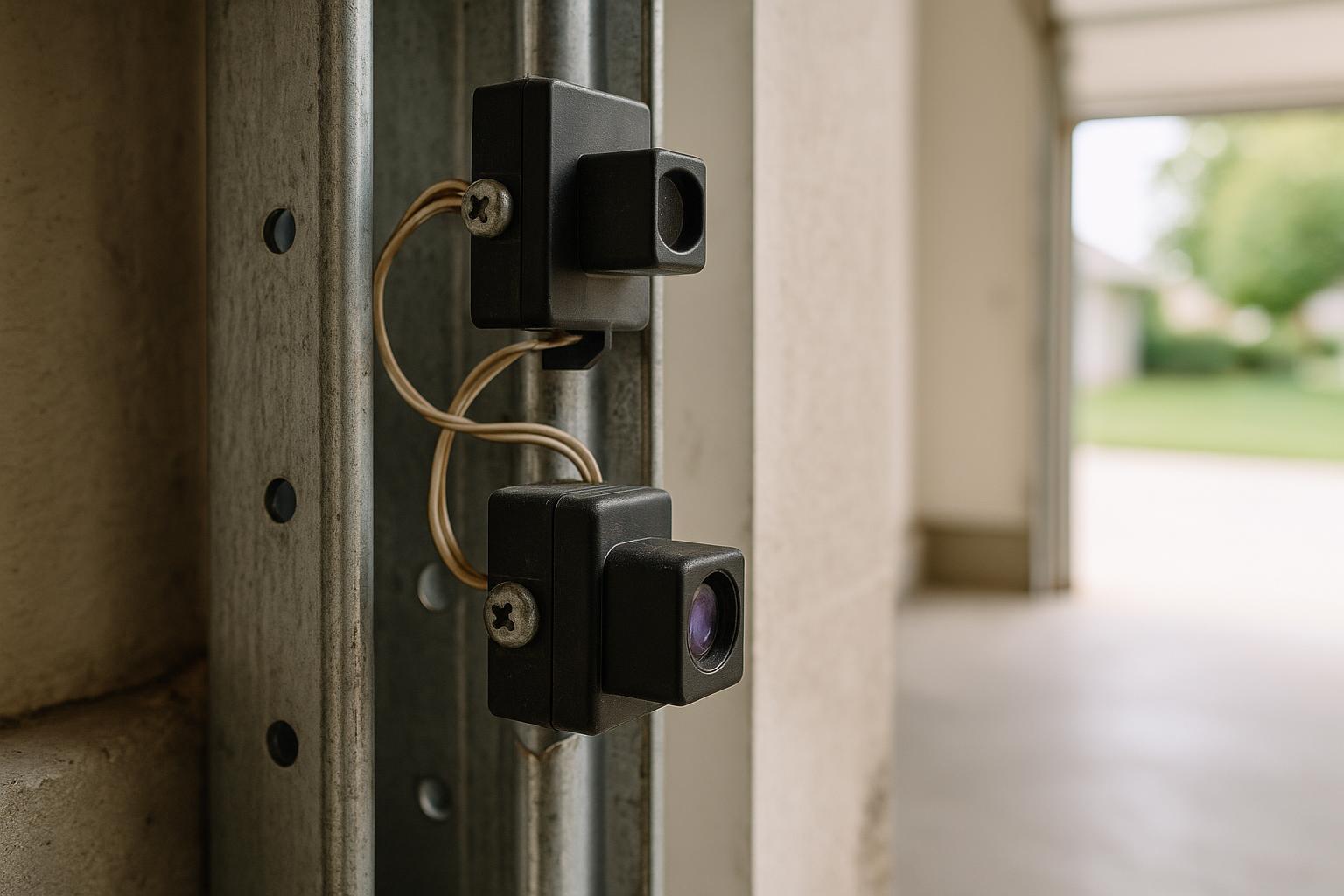
- Photo-eye sensors: Two small sensors mounted near the bottom of your garage door tracks, about six inches off the ground. They send an invisible beam across the doorway. If something breaks that beam while the door is closing, the opener reverses the door to prevent crushing whatever is in the way.
- Auto-reverse (force sensitivity): If the door physically contacts an object while closing, the opener detects the resistance and reverses direction. This is controlled by the close-force adjustment on your opener.
Both systems are designed to protect people, pets, and property. But when something goes wrong with either system, your door may reverse even when nothing is actually in the way.
The Most Common Causes of a Reversing Garage Door
1. Misaligned Photo-Eye Sensors
This is the number one reason we see garage doors reversing prematurely, especially here in Hudson where seasonal temperature swings can shift door frames and tracks slightly over time. The photo-eye sensors need to be precisely aligned with each other to maintain their infrared beam. If one sensor gets bumped, vibrated loose, or shifts even a fraction of an inch, the opener interprets the broken beam as an obstruction and reverses.
What to check: Look at both sensors near the base of your tracks. Most models have a small LED light on each unit. If one light is blinking rather than glowing steadily, that sensor is likely out of alignment. You can gently adjust it by hand until the light becomes solid again.
2. Dirty or Obstructed Sensor Lenses
Sometimes the sensors are perfectly aligned, but dirt, cobwebs, or moisture on the lens blocks the beam. This is especially common in garages that see a lot of dust, lawn debris, or condensation during Ohio's humid summers.
What to check: Wipe both sensor lenses with a soft, dry cloth. It's a simple fix that solves the problem more often than you'd expect.
3. Close-Force Setting Is Too Low
Your garage door opener has an adjustment that controls how much force it applies when closing. If this setting is too low, the opener may interpret normal friction from the tracks or weatherstripping as an obstruction and reverse the door before it reaches the ground.
What to check: Most openers have a small adjustment screw or dial labeled "close force" or "down force." Increasing it slightly — usually a quarter turn at a time — can help. However, be cautious. Setting the force too high can defeat the safety mechanism, which is dangerous. If you're unsure, it's best to have a professional handle this adjustment.
4. Damaged or Worn Tracks
If your garage door tracks are bent, dented, or have accumulated debris, the rollers can bind or stick as the door travels downward. The opener senses this resistance and reverses. Over time, tracks can develop problems from impacts, temperature changes, or simply age.
What to check: Visually inspect both tracks from top to bottom. Look for obvious bends, gaps between the track and the wall, or buildup of grime along the track surface. Minor debris can be cleaned out, but bent tracks should be repaired or replaced by a professional.
5. Broken or Worn Rollers
Garage door rollers take a beating. Standard nylon or steel rollers can crack, chip, or seize up after years of use. When a roller doesn't spin freely, it creates drag that the opener may interpret as an obstruction.
What to check: With the door closed, inspect each roller where it sits in the track. Try spinning them by hand. If any roller is visibly cracked, flat on one side, or won't turn, it needs to be replaced.
6. Travel Limit Settings Need Adjustment
Your opener has settings that tell it exactly how far the door should travel when opening and closing. If the close-limit setting is off, the opener may think the door has reached the floor when it hasn't, or it may push past the floor level and trigger the auto-reverse.
What to check: This is another adjustment screw or dial on the opener unit, typically labeled "down limit" or "close limit." Small adjustments can make a big difference, but getting it wrong can cause other problems. If you've never adjusted these settings before, we recommend calling a technician.
7. Wiring Issues
The wires running from your opener to the photo-eye sensors can become frayed, pinched, or disconnected over time. Rodents are a common culprit — they love chewing on low-voltage wiring, and garages provide easy access. A damaged wire can cause intermittent sensor failures that make your door reverse unpredictably.
What to check: Follow the wires from each sensor back toward the opener. Look for visible damage, loose connections at the sensor terminals, or sections where the wire may be pinched behind a bracket or track mount.
When to Call a Professional
Some of these fixes — cleaning sensors, gently realigning them, or wiping down tracks — are safe for any homeowner to handle. But others involve adjusting opener settings, working near springs under tension, or diagnosing electrical issues. These are situations where a wrong move can create a safety hazard or cause further damage to your system.
At Hudson Garage Door, we diagnose reversing issues quickly because we see them every week. We'll identify the exact cause, explain your options clearly, and get your door closing properly again — usually in a single visit. We serve homeowners throughout Hudson, Stow, Twinsburg, Macedonia, Aurora, and Kent, and we always show up on time with the parts most commonly needed already on the truck.
Preventing Future Reversing Problems
A little preventive maintenance goes a long way toward keeping your garage door operating smoothly:
- Test your sensors monthly by placing an object like a cardboard box in the door's path and pressing close. The door should reverse immediately.
- Clean sensor lenses every few months, especially after mowing season or dusty weather.
- Lubricate rollers, hinges, and tracks twice a year with a silicone-based garage door lubricant.
- Schedule annual maintenance with a professional to catch worn parts before they cause problems.
A reversing garage door is trying to tell you something. Most of the time, the fix is simpler and less expensive than homeowners expect. But ignoring the problem — or disabling the safety features to force the door closed — is never the right answer. If your garage door won't stay closed and you can't pinpoint the cause, give us a call. We'll get it sorted out.