
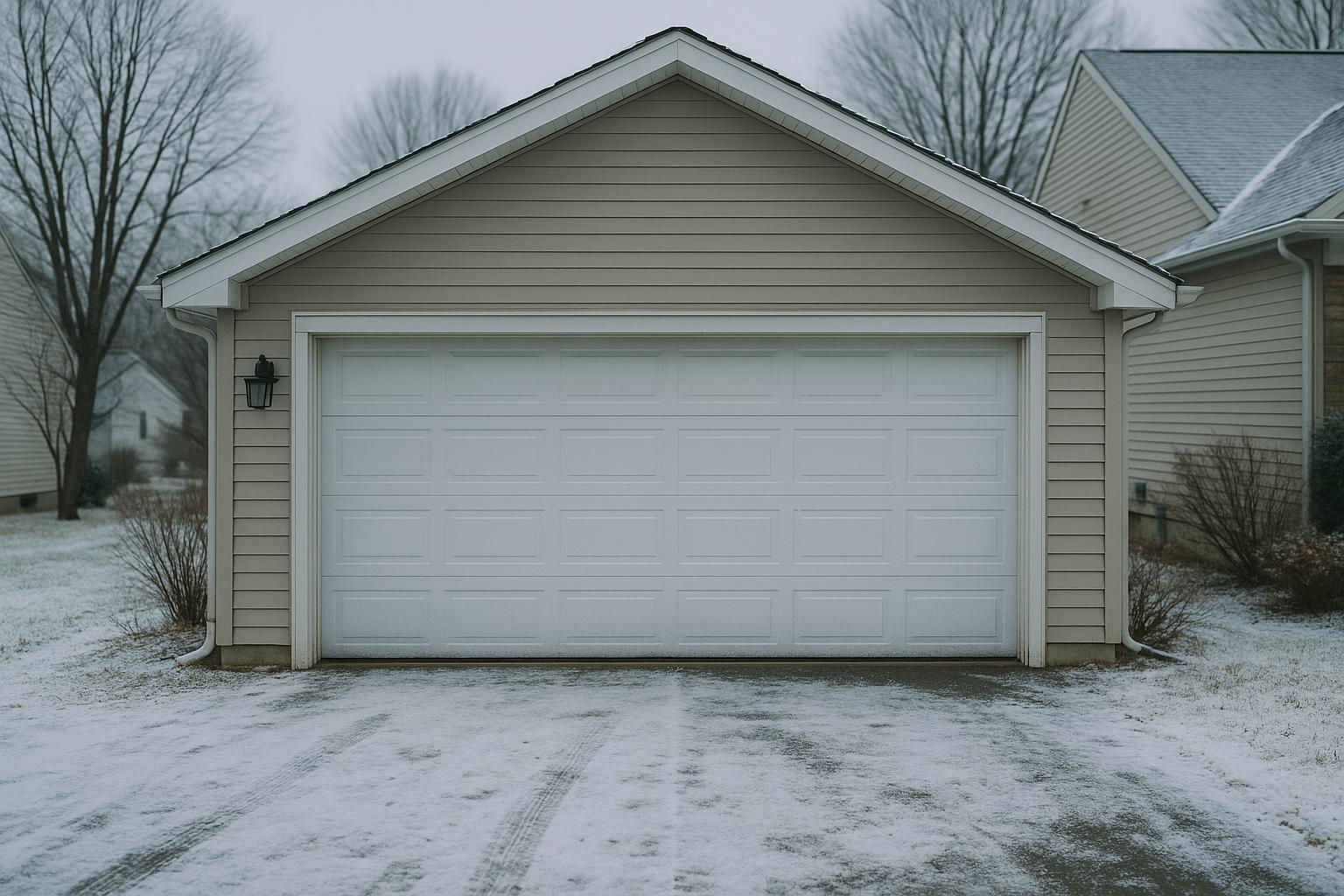
Why Cold Weather and Garage Doors Don't Always Get Along
If you've ever walked out on a frigid Hudson morning, pressed your garage door opener, and heard nothing but a groan or a strained motor, you're not alone. Cold weather is one of the most common reasons homeowners experience garage door problems, and living in Northeast Ohio means dealing with months of freezing temperatures, ice, and snow that can all take a toll on your door.
Understanding why cold weather affects your garage door — and knowing what steps to take when it happens — can save you time, frustration, and potentially expensive repairs. Let's walk through the most common cold-weather garage door issues and what you can do about each one.
The Garage Door Is Frozen to the Ground
This is probably the most common winter garage door problem in Hudson and surrounding areas like Stow, Twinsburg, and Aurora. When temperatures drop below freezing, moisture along the bottom seal of your garage door can freeze, essentially gluing the door to the ground.
If this happens, do not keep pressing your opener button. Forcing the door open can damage the opener motor, strip the gears, or even pull the door off its tracks. Instead, try these steps:
- Break the seal gently. Use a flat shovel or a heat gun to carefully melt or chip away the ice along the bottom edge of the door. Work slowly from one side to the other.
- Pour warm water along the seal. This can melt the ice quickly, but be aware that the water may refreeze if temperatures stay low. Dry the area as much as possible afterward.
- Apply a silicone-based lubricant to the bottom seal once the door is free. This creates a barrier that helps prevent moisture from bonding the seal to the concrete in the future.
Metal Parts Contract in the Cold
Garage doors rely on a system of metal components — tracks, springs, hinges, and rollers — that are all affected by temperature changes. When the temperature drops significantly, metal contracts. This contraction can cause several problems:
- Tracks may become misaligned. Even slight shifts can cause the door to bind, move unevenly, or get stuck partway up.
- Springs lose tension. Cold metal is less flexible, which means your torsion or extension springs may not provide enough force to lift the door. This puts extra strain on your opener.
- Hinges and rollers stiffen. Without proper lubrication, these parts can seize up or move sluggishly, making the door feel heavier than usual.
Regular maintenance before winter arrives is the best way to prevent these issues. A professional tune-up that includes lubrication, tension adjustment, and track alignment can make a significant difference in how your door performs all season long.
Your Garage Door Opener Struggles or Fails
If your garage door opener seems to be working harder than usual — or stops working altogether — cold weather could be the culprit. Here's why:
Thickened Lubricant
The grease on your garage door's moving parts can thicken in extreme cold, creating more resistance. This forces the opener motor to work harder, which can trigger the motor's built-in overload protection and shut it down. Switching to a lithium-based or silicone-based lubricant designed for cold temperatures can help keep everything moving smoothly.
Weakened Batteries
If you use a wireless keypad or remote to open your garage door, cold temperatures can drain batteries faster than normal. Before assuming something major is wrong, try replacing the batteries in your remote and keypad. It's a simple fix that solves the problem more often than you'd think.
Electrical Issues
Power surges and outages are more common during winter storms. If your opener isn't responding at all, check your circuit breaker and make sure the unit is receiving power. If the outlet works but the opener doesn't, it may be time to call a professional for diagnosis.
Weatherstripping Wears Out Faster in Winter
The rubber weatherstripping along the bottom and sides of your garage door takes a beating during Ohio winters. Repeated freezing and thawing cycles cause the rubber to crack, become brittle, and lose its seal. When this happens, you'll notice cold drafts, moisture, and even snow blowing into your garage.
Replacing worn weatherstripping is one of the most affordable upgrades you can make, and it pays for itself by keeping your garage warmer and protecting anything stored inside from moisture damage. If your garage is attached to your home, good weatherstripping also helps with energy efficiency by reducing heat loss.
How to Winterize Your Garage Door
The best time to prepare your garage door for cold weather is before the first hard freeze. Here's a simple checklist that Hudson homeowners can follow each fall:
- Inspect and replace weatherstripping if it's cracked, torn, or no longer creating a tight seal.
- Lubricate all moving parts — springs, hinges, rollers, and tracks — with a cold-weather-rated lubricant.
- Test the door's balance. Disconnect the opener and lift the door manually to about waist height. If it stays in place, the balance is good. If it falls or rises, the springs may need adjustment.
- Check the tracks for debris, rust, or misalignment. Clean them with a damp cloth and tighten any loose brackets.
- Replace remote and keypad batteries so you're not caught off guard on the coldest morning of the year.
- Schedule a professional maintenance visit. A trained technician can spot worn parts, adjust spring tension safely, and ensure everything is ready for winter.
When to Call a Professional
Some cold-weather garage door problems are easy to handle on your own — replacing batteries, applying lubricant, or clearing ice from the bottom seal. But other issues require professional attention:
- Broken or weakened springs. Never attempt to adjust or replace garage door springs yourself. They're under extreme tension and can cause serious injury.
- A door that's off its tracks. Trying to force a derailed door back into position can cause further damage and create a safety hazard.
- An opener motor that overheats or smells like burning. This could indicate a failing motor or an electrical problem that needs immediate attention.
- Persistent problems after basic troubleshooting. If your door still won't open properly after you've checked the obvious causes, there may be a deeper mechanical issue at play.
At Hudson Garage Door, we provide prompt, honest service to homeowners throughout Hudson, Stow, Macedonia, Kent, and the surrounding communities. Whether you need an emergency repair on a freezing morning or want to schedule a fall maintenance visit to get ahead of winter, we're here to help.
Don't Wait for the First Freeze
Cold-weather garage door problems are largely preventable with a little preparation. Taking the time to winterize your door in the fall — or calling in a professional for a thorough inspection — can save you from being stuck in your driveway on the coldest day of the year. If your garage door is already giving you trouble this winter, don't force it. Give us a call, and we'll get it working right.