
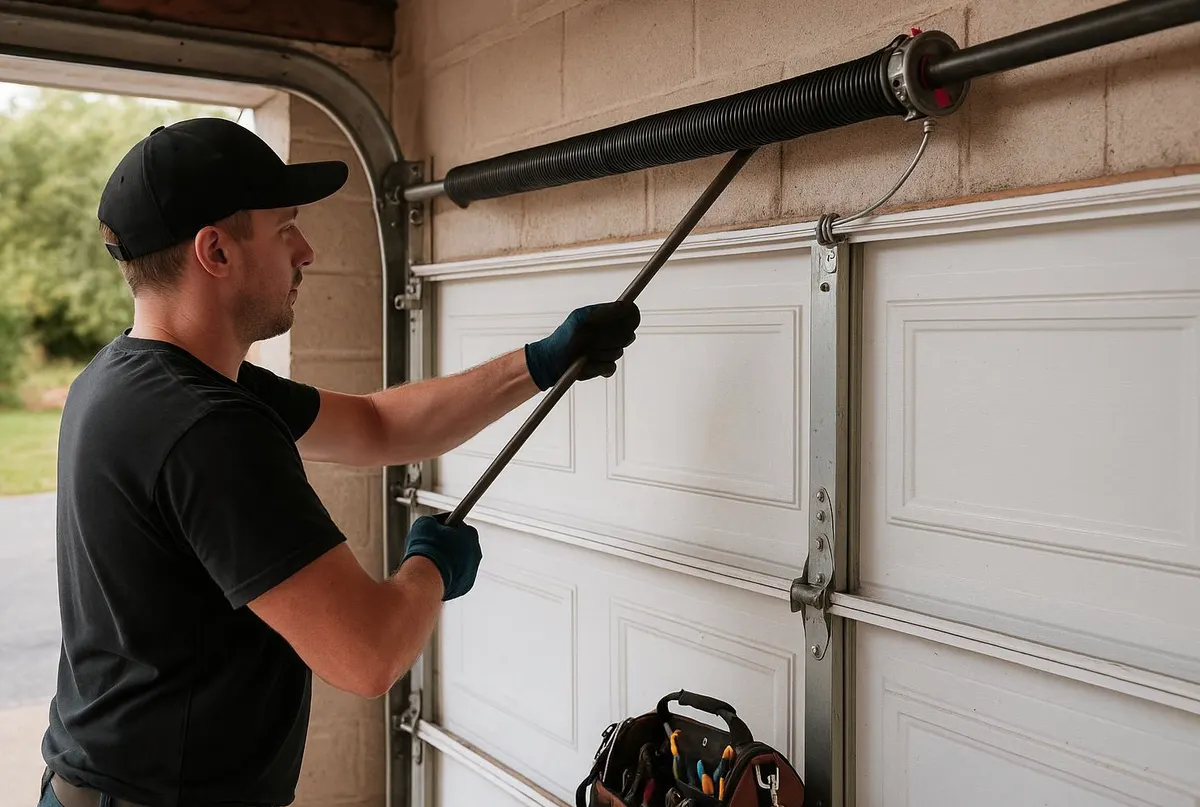
Put off a broken garage door spring for another season and you're left with two choices: live with a door that won't open, or grab a wrench and try to fix it yourself. The second option is how otherwise careful homeowners end up with broken fingers, crushed hands, or worse. Garage door springs are not a weekend project, and understanding why can keep you out of the emergency room.
What's Actually Under That Door
Garage door springs don't just hold the door up — they store enormous mechanical energy. A torsion spring mounted above the door is wound dozens of times during installation, and that tension is what allows a 150-to-400-pound door to lift with one hand. Extension springs, mounted along the horizontal tracks on either side, work the same way under stretch instead of twist.
When that spring is intact, the tension is contained and controlled. When it breaks, or when someone tries to unwind or remove it without the right tools, all of that stored energy releases at once. There's no gradual process here — it's instantaneous, and it happens in a small space right above your head.
How Badly Things Go Wrong
The injuries associated with garage door springs are well documented by safety organizations and emergency rooms, and they're consistently more severe than people expect from a "simple" home repair. A spring under tension can:
- Snap winding bars or screwdrivers out of someone's hands with enough force to break fingers or fracture a wrist
- Send metal fragments flying if the spring itself fails mid-repair
- Cause the door to drop suddenly while someone's hands, arms, or head are in the path
- Cause lacerations deep enough to require stitches when fingers get caught between coils
This is why torsion springs are routinely named as one of the few home maintenance tasks that lands people in urgent care more often than almost any other repair around the house. It's not a reputation issue — it's physics. A coiled spring behaves nothing like a bolt or a hinge, and there's no safe way to "ease into it" without the correct winding bars, a stable ladder setup, and real experience reading how much tension remains in a damaged spring.
Winter Makes It Worse
In this part of Ohio, cold winters bring an added risk. Steel contracts in freezing temperatures, and springs that have been exposed to ice, road salt residue, and repeated temperature swings become more brittle over time. A spring that might have failed gradually in milder weather can snap suddenly on a subzero morning, with no warning beyond a loud bang. That's exactly the kind of failure that catches homeowners off guard mid-repair, because a spring that *looks* intact can still have compromised coils ready to let go under load.
What Actually Prevents an Injury
The honest answer is that the single most effective safety measure is not attempting torsion or extension spring work yourself. But there's more nuance to it than just "call someone":
- Don't disconnect or force the door manually once you notice a spring has broken (a loud bang, a door that suddenly feels much heavier, or a cable hanging loose). Leave the door closed and leave the opener disengaged.
- Never use the opener to try to force a door with a broken spring. It can strip the opener's gears or drop the door unexpectedly.
- Keep hands and tools away from the spring area entirely, even if it looks stationary. A damaged spring can still be holding tension.
- If you're doing routine maintenance, like lubricating hinges, rollers, and tracks or checking weatherstripping before winter, that's safe and worth doing regularly — just steer clear of the spring assembly itself.
- Watch for warning signs before a full break: a door that feels increasingly heavy, visible gaps or stretching in the spring coils, or a door that closes unevenly. These are signals to schedule a repair before the spring fails on its own schedule.
When to Call Hudson Garage Door
If you've heard a bang from the garage, noticed a door that suddenly won't budge, or you're just due for a seasonal check before winter sets in, that's the point to call in a professional rather than reach for a wrench. Our Spring Replacement service uses the correct winding bars, properly rated springs for your door's weight, and safety cables to control tension the entire time. If the spring has already let go and the door is stuck in place, our Emergency Garage Door Service gets a technician out to secure the door safely and get it back in working order without putting you at risk.
Don't gamble with a job that sends more people to urgent care than almost any other home repair. If your garage door spring is making noise, sagging, or has already broken, call Hudson Garage Door today — we serve Hudson, OH and the surrounding communities with same-day help when you need it.