
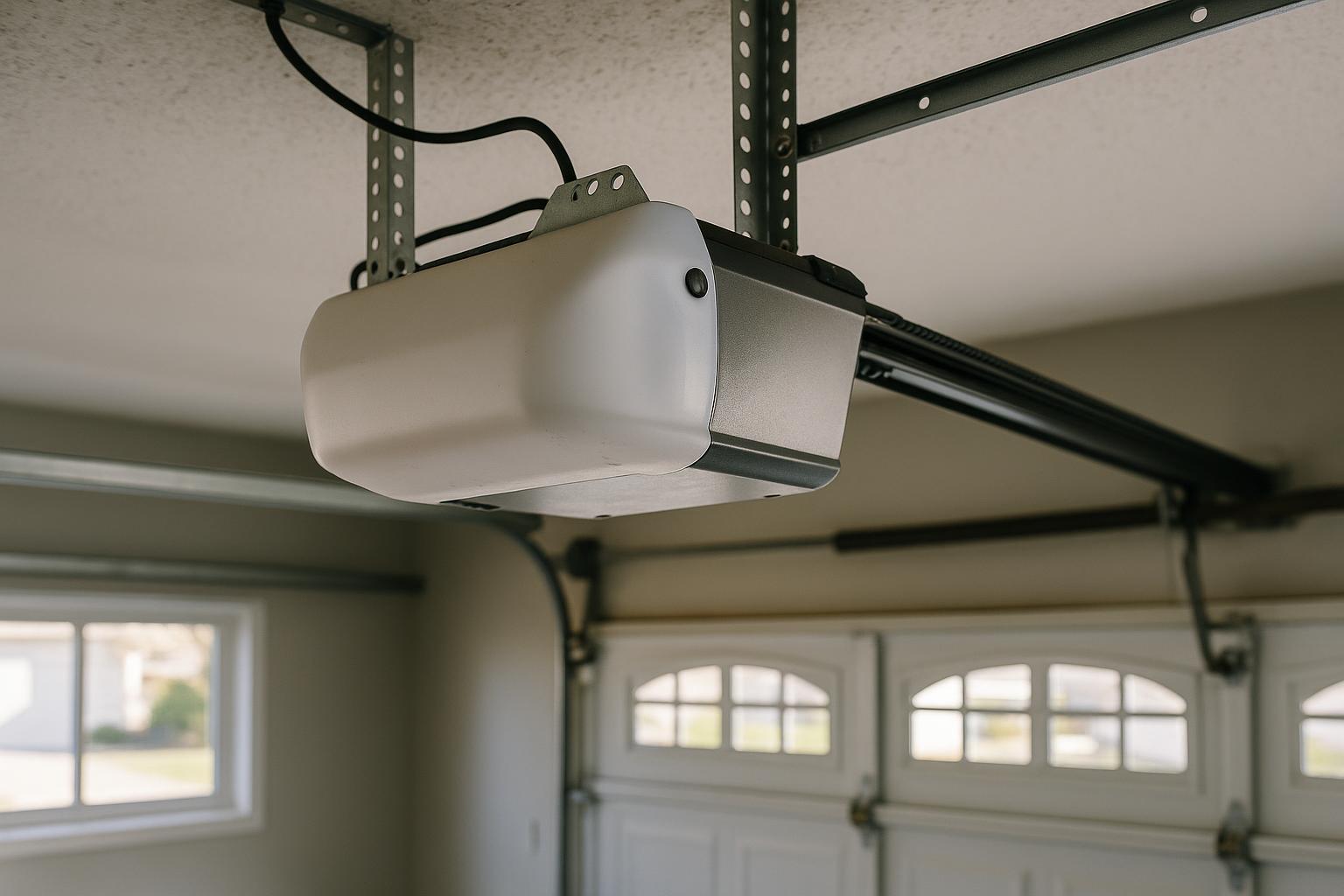
Your Garage Door Opener Is Trying to Tell You Something
Most homeowners in Hudson don't think about their garage door opener until it stops working entirely. But just like any mechanical device, openers give off warning signs well before they fail completely. Catching these signs early can save you from being stuck outside your garage on a busy morning — or worse, dealing with a safety hazard.
The average garage door opener lasts between 10 and 15 years, depending on usage, maintenance, and the quality of the unit. If yours is getting up there in age or acting strangely, here's what to watch for and what your options are.
7 Warning Signs Your Garage Door Opener Is Going Bad
1. The Motor Runs But the Door Doesn't Move
If you press the button and hear the motor humming or grinding but the door stays put, something has gone wrong internally. This could be a stripped gear, a broken drive mechanism, or a failing motor. In some cases, a single part can be replaced. But if the opener is older, repeated internal failures are a sign the whole unit is wearing out.
2. The Door Moves Slowly or Unevenly
A healthy garage door opener should lift and lower the door at a consistent speed. If the door hesitates, moves in jerky motions, or takes noticeably longer to open or close than it used to, the opener's motor may be losing power. This is especially common in older chain-drive models that have seen years of heavy use.
3. Excessive Noise During Operation
Some noise is normal, especially with chain-drive openers. But if your opener has become significantly louder — grinding, squealing, rattling, or banging — that's a red flag. Worn gears, loose hardware, and failing motors all create unusual sounds. While some noise issues can be resolved with lubrication or tightening, persistent loud operation usually points to a deeper problem.
4. The Opener Doesn't Respond to the Remote or Wall Button
Before assuming the opener is failing, replace the batteries in your remote. If that doesn't help and both the remote and the wall-mounted button are unresponsive, the issue likely lies in the opener's logic board or receiver. Electrical components degrade over time, and a failing circuit board can cause intermittent or total loss of response.
5. The Door Reverses for No Apparent Reason
While we've covered doors that reverse before hitting the floor in a previous post, it's worth noting that the opener itself can be the culprit. If the force settings have drifted or the logic board is malfunctioning, the opener may send incorrect signals that cause the door to reverse unexpectedly. A professional can diagnose whether the issue is with the opener, the sensors, or the door itself.
6. Vibration That Shakes the Ceiling or Mounting Bracket
An opener that vibrates excessively during operation is working harder than it should. This can happen when internal components are worn, the unit is improperly mounted, or the motor is struggling to handle the weight of the door. Over time, excessive vibration can loosen the mounting hardware and create a safety risk.
7. The Opener Is More Than 15 Years Old
Even if your opener still technically works, age alone is a reason to start planning for a replacement. Openers manufactured before 1993 may lack critical safety features like auto-reverse sensors, which are now required by federal law. Older units also tend to lack modern conveniences like smartphone connectivity, battery backup, and quieter belt-drive operation.
Should You Repair or Replace Your Garage Door Opener?
This is the question we hear most often from homeowners in Hudson and surrounding areas like Stow and Twinsburg. The answer depends on a few factors:
- Age of the unit: If your opener is less than 8 years old and the issue is a single component like a gear or circuit board, repair is usually the smarter investment.
- Cost of repair vs. replacement: A good rule of thumb is if the repair costs more than half the price of a new opener, replacement makes more financial sense.
- Frequency of problems: If you've had to call for repairs multiple times in the past year or two, the opener is telling you it's done.
- Safety features: If your current opener lacks auto-reverse sensors or a rolling code system, upgrading to a modern unit is worth it for your family's safety alone.
- Noise concerns: Many Hudson homeowners with bedrooms above or adjacent to the garage upgrade to belt-drive openers simply because they're dramatically quieter.
What to Expect From a Modern Garage Door Opener
If you do decide to replace your opener, you might be surprised by how much the technology has improved. Today's garage door openers offer features that weren't available even five years ago:
- Belt-drive motors that operate almost silently
- Battery backup systems that keep your door working during power outages — a real advantage during Ohio storms
- Wi-Fi connectivity that lets you open, close, and monitor your garage door from your smartphone
- Integrated LED lighting that illuminates your entire garage
- Soft start and stop technology that reduces wear on the door and the opener
- Enhanced security features like rolling codes that change every time you use the remote, preventing code theft
For homeowners in Hudson and nearby communities like Macedonia, Aurora, and Kent, a new opener can also add value to your home. Buyers notice a smooth, quiet, and modern garage door system, and it's one of those upgrades that pays for itself in daily convenience.
Why Professional Installation Matters
While some handy homeowners attempt to install garage door openers themselves, there are good reasons to have a professional handle the job. Improper installation can lead to premature wear on the opener, misaligned safety sensors, and even damage to the garage door itself. The opener needs to be properly matched to the weight and size of your door, and the force and travel limits need to be precisely calibrated.
A professional installer will also make sure the mounting bracket is secure, the rail is properly aligned, and the safety features are functioning correctly. It's a job that takes an experienced technician about two to three hours, and the peace of mind is well worth it.
Don't Wait Until You're Locked Out
If your garage door opener is showing any of the warning signs above, the best time to address it is before it fails completely. A garage door that won't open on a Monday morning or won't close securely when you leave for vacation is more than an inconvenience — it's a security risk.
At Hudson Garage Door, we help homeowners across Hudson and the surrounding area evaluate their openers honestly. If a repair makes sense, we'll tell you. If it's time for a new unit, we'll walk you through your options and handle the installation from start to finish. Either way, you'll know exactly what you're getting and what it costs before any work begins.
Give us a call or reach out online to schedule an inspection. We'll take a look at your opener, let you know where it stands, and help you make the right decision for your home and your budget.