
Your Garage Door Shouldn't Sound Like That
You press the button, and instead of a smooth, quiet operation, your garage door announces itself to the entire neighborhood. Maybe it's a grinding noise that makes you wince. Maybe it's a high-pitched squeal that sends the dog running. Or maybe it's a rhythmic banging that sounds like something is about to break loose.
Here's the thing — a properly maintained garage door should operate relatively quietly. When yours starts making unusual noises, it's almost always trying to tell you that something needs attention. The good news is that catching these issues early can save you from expensive repairs or a complete door failure down the road.
As a garage door company serving homeowners throughout Hudson, OH and the surrounding area, we hear about noisy garage doors all the time. Let's break down what the most common sounds mean and what you should do about each one.
Grinding or Scraping Sounds
A grinding noise is one of the most common complaints we hear from homeowners. This sound usually points to one of a few issues:
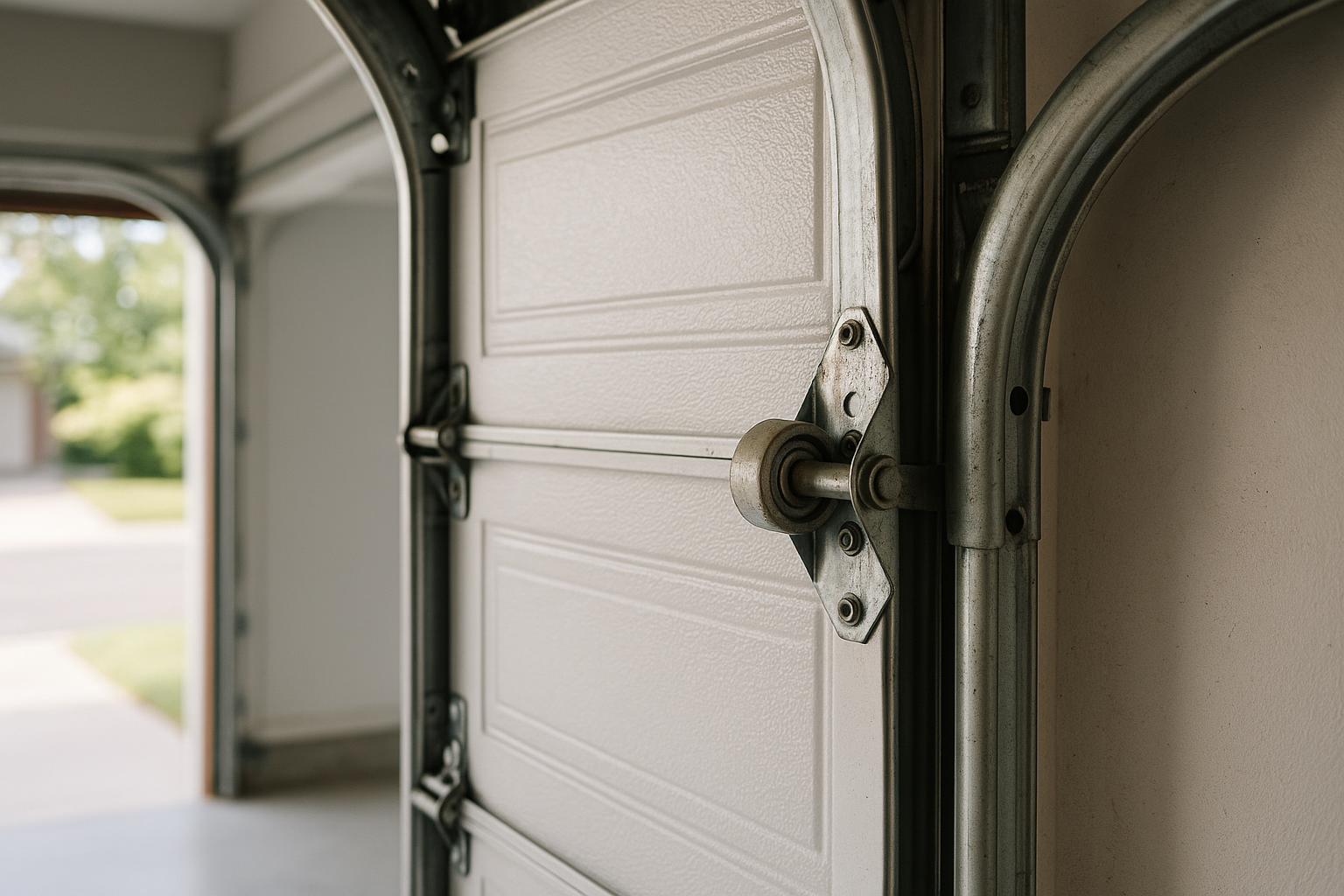
- Worn rollers: Metal rollers wear down over time and can start grinding against the track. If your door has steel rollers, they may need to be replaced with nylon rollers, which are significantly quieter and don't require as much lubrication.
- Misaligned tracks: When the tracks that guide your door become bent or shifted, the door can scrape against them as it moves. This creates a harsh metal-on-metal sound and, if left unchecked, can cause serious damage to both the tracks and the door panels.
- Lack of lubrication: Moving parts need lubrication to function smoothly. When hinges, rollers, and bearings dry out, they create friction that produces grinding sounds.
If you hear grinding, start by visually inspecting the tracks for obvious bends or obstructions. But if the tracks look fine, it's best to have a technician take a closer look before the problem gets worse.
Squealing or Screeching
A high-pitched squeal coming from your garage door is hard to ignore — and you shouldn't ignore it. This sound typically indicates:
- Dry or rusted springs: Your torsion or extension springs bear an enormous amount of tension. When they lack proper lubrication, they can produce a loud squealing noise during operation. Rusted springs are also more prone to snapping, which is a safety hazard.
- Worn bearings: The bearings in your spring system and rollers can wear out and start screeching. This is especially common in garage doors that are more than ten years old.
- Opener chain or belt issues: If the squeal seems to come from the opener unit itself, the drive mechanism may need adjustment or lubrication.
A quick application of garage door-specific lubricant (not WD-40, which is a solvent, not a lubricant) can sometimes quiet a squealing door. Use a silicone-based or lithium-based spray on the springs, hinges, rollers, and bearing plates. If the noise persists after lubrication, the parts may be too worn and need replacement.
Rattling or Vibrating
Rattling sounds often indicate loose hardware. Your garage door moves up and down multiple times a day, and all that vibration gradually loosens nuts, bolts, and screws throughout the system. Common culprits include:
- Loose track brackets: The brackets that secure the tracks to the wall and ceiling can work themselves loose over time.
- Worn hinges: Hinges connect the panels of your garage door. When they wear out, they develop play that creates a rattling sound.
- Loose opener mounting: If your garage door opener isn't securely mounted to the ceiling, it can vibrate and rattle during operation.
You can carefully tighten visible nuts and bolts with a socket wrench, but be cautious. Never attempt to adjust anything connected to the spring system — those components are under extreme tension and can cause serious injury.
Popping or Snapping Sounds
A popping sound when your garage door moves can be unsettling. This noise is often caused by:
- Torsion spring issues: Springs that are binding or need lubrication can pop as the coils shift during operation.
- Panel sections shifting: As the door bends around the curved portion of the track, worn or dry hinges can create a popping sound.
- Stripped gears in the opener: If the popping comes from the motor unit, the internal gears may be wearing out. This is especially common in older chain-drive openers.
A single loud snap or bang, on the other hand, could mean a spring has broken. If you hear this sound and your door suddenly won't open or feels extremely heavy, stop using the door immediately and call for professional service.
Banging When the Door Closes
If your garage door slams shut the last foot or so instead of closing smoothly, the springs may be losing tension. Properly balanced springs control the door's descent so it closes gently. When springs weaken, they can no longer manage the weight of the door effectively, resulting in a loud bang at the bottom of travel.
This isn't just a noise problem — it puts stress on the door panels, tracks, and opener, and it can be a safety concern for anyone standing nearby. A professional can test your door's balance and determine whether the springs need adjustment or replacement.
When to DIY and When to Call a Pro
Some noise issues have simple fixes that homeowners in Hudson can handle themselves:
- Lubricate moving parts every six months with a silicone-based garage door lubricant.
- Tighten loose hardware with basic hand tools, sticking to nuts and bolts you can easily see and reach.
- Clear debris from the tracks using a damp cloth. Dirt, leaves, and small rocks can cause scraping sounds.
However, you should call a professional for anything involving:
- Springs (torsion or extension)
- Cable replacement or adjustment
- Track realignment
- Opener motor or gear repair
- Any situation where the door feels unbalanced or unusually heavy
Garage door components operate under significant tension and weight. Attempting DIY repairs on these parts without proper training and tools can result in serious injury.
Don't Wait Until the Noise Becomes a Breakdown
The noises your garage door makes are early warning signs. Addressing them promptly almost always costs less than waiting for a full breakdown. A door that grinds today could seize up in its tracks next week. A squeal you've been living with for months could end with a snapped spring that leaves your car trapped in the garage on a Monday morning.
At Hudson Garage Door, we help homeowners across Hudson, Stow, Twinsburg, and the surrounding communities diagnose and fix noisy garage doors every day. Whether your door needs a simple tune-up or a more involved repair, we'll tell you exactly what's going on and give you honest options — no pressure, no unnecessary upselling.
If your garage door has been making sounds that don't seem right, give us a call. We'll get it running quietly again so the only thing your neighbors hear is you pulling out of the driveway.