
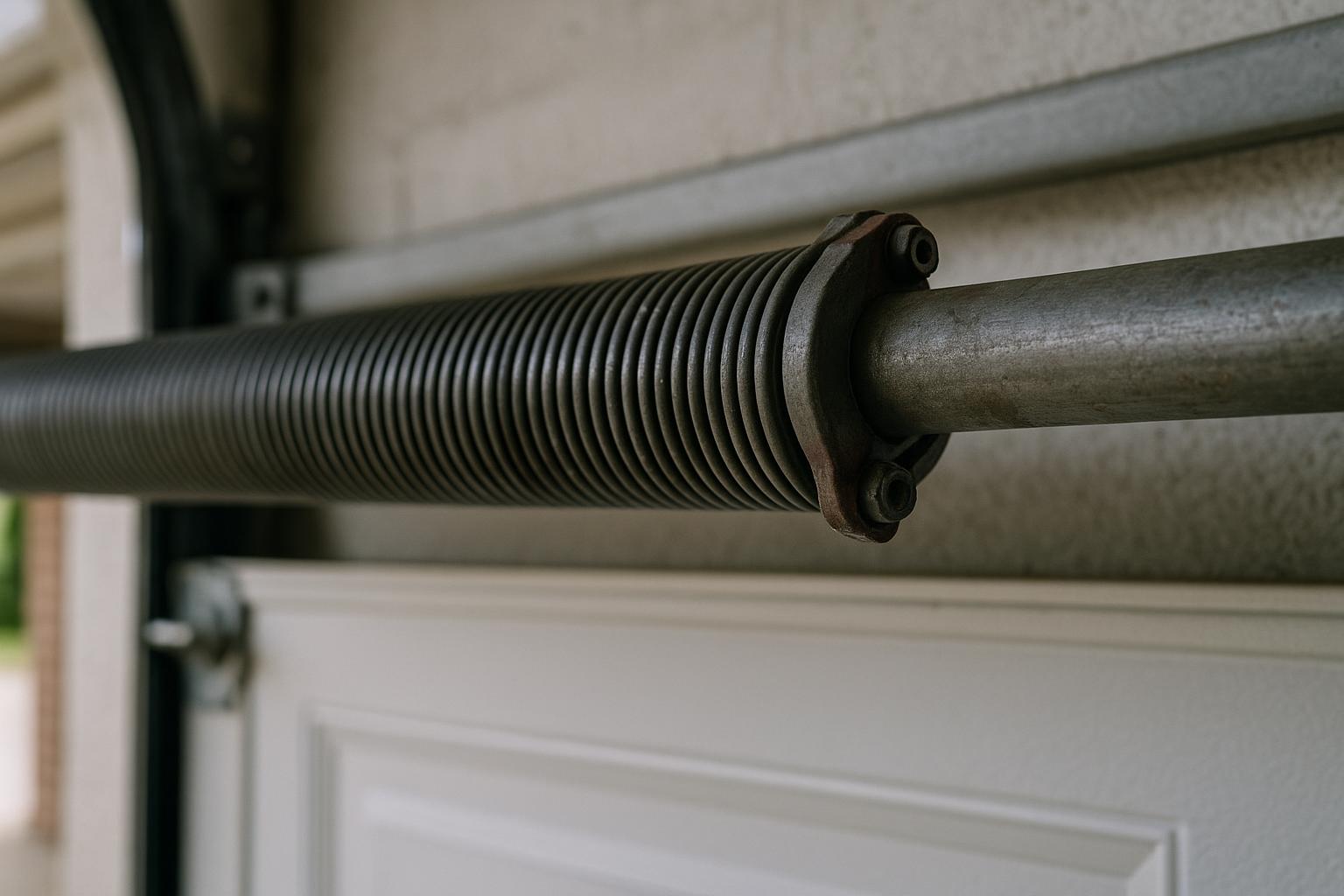
Your Garage Door Springs Are Doing More Work Than You Think
Most homeowners in Hudson don't think about their garage door springs until something goes wrong. But here's a fact that surprises many people: your garage door springs are responsible for lifting the entire weight of your door — which can be anywhere from 130 to 350 pounds depending on the material and size. The opener motor assists, but the springs do the real heavy lifting.
Because they're under constant tension and used multiple times a day, garage door springs are one of the most common components to wear out. Understanding their lifespan and knowing the warning signs of failure can save you from an inconvenient — or even dangerous — situation.
How Long Do Garage Door Springs Typically Last?
Garage door springs are rated by cycles. One cycle equals one full open and one full close of the door. Here's a general breakdown:
- Standard torsion springs: Rated for approximately 10,000 cycles, which translates to roughly 7–10 years for the average household.
- High-cycle torsion springs: Available in 25,000, 50,000, or even 100,000 cycle ratings. These can last 15–30 years or more depending on usage.
- Extension springs: Typically rated for around 10,000 cycles, similar to standard torsion springs, though they tend to wear less evenly.
If your household uses the garage door as the primary entry point — which is extremely common here in Hudson — you might be running four to six cycles per day. That adds up to roughly 1,500–2,000 cycles per year, which means standard springs could start showing wear in as few as five to seven years.
Warning Signs Your Springs Are Wearing Out
Springs rarely fail without warning. If you pay attention, you'll notice several signs that replacement is coming due:
The Door Feels Heavier Than Usual
Try this simple test: disconnect the opener by pulling the emergency release cord, then manually lift the door halfway. A properly balanced door should stay in place on its own. If it feels unusually heavy or slides back down, your springs are losing tension and struggling to counterbalance the door's weight.
The Door Opens Unevenly or Crooked
If one spring is weaker than the other — or if you have a two-spring system where one has already broken — the door may rise unevenly. You might notice one side lifting faster than the other, which puts stress on the tracks and the opener.
Visible Gaps in the Spring Coils
Take a look at the torsion spring mounted above your door. When a spring is in good condition, the coils are tightly wound together. As it weakens or breaks, you may see a visible gap or separation between the coils. This is a clear indicator that replacement is needed soon.
Loud Bang From the Garage
If you heard a loud bang — almost like a firecracker — coming from your garage when no one was in there, a spring likely snapped. A broken spring releases an enormous amount of stored energy, which is why the sound is so startling. After a spring breaks, the door will be extremely difficult or impossible to open.
The Opener Strains or Stops Working
When springs lose their ability to counterbalance the door, your opener motor has to work much harder. You might notice it straining, moving the door more slowly, or stopping partway through the cycle. Running the opener under these conditions can burn out the motor prematurely, turning a spring replacement into a much more expensive repair.
Can You Replace Garage Door Springs Yourself?
We understand the DIY spirit — Hudson homeowners tend to be handy and resourceful. But garage door spring replacement is one job we strongly recommend leaving to a professional. Here's why:
- Extreme tension: Torsion springs are wound under tremendous force. A spring that slips during installation can cause serious injury.
- Specialized tools required: Proper replacement requires winding bars, clamps, and precise calibration that most homeowners don't have on hand.
- Matching specifications: Springs must be matched to your door's exact weight, height, and track configuration. The wrong spring can damage the door or create a safety hazard.
A trained technician can typically complete a spring replacement in under an hour, and the peace of mind is well worth it.
Should You Replace One Spring or Both?
If your garage door has a two-spring system and only one has broken, you might wonder whether it makes sense to replace just the failed spring. Our recommendation is almost always to replace both at the same time. Here's the reasoning:
Both springs were installed at the same time and have endured the same number of cycles. If one has reached the end of its life, the other is likely close behind. Replacing both springs together ensures balanced operation and saves you from paying for a second service call in a few months when the remaining original spring inevitably fails.
Upgrading to High-Cycle Springs
If you're replacing springs anyway, it's worth considering an upgrade to high-cycle springs. While they cost more upfront, they last significantly longer and can be a smart investment — especially for families in Hudson and surrounding areas like Stow, Twinsburg, and Aurora who use their garage door frequently throughout Ohio's long winters.
High-cycle springs also tend to operate more smoothly and quietly, which is a nice bonus if you have living space above or adjacent to the garage.
Preventive Maintenance Extends Spring Life
You can get more life out of your garage door springs with some basic maintenance:
- Lubricate the springs with a silicone-based garage door lubricant two to three times per year. This reduces friction and prevents rust, which is especially important given the humidity and salt air exposure we get in Northeast Ohio.
- Schedule annual inspections. A professional maintenance visit includes checking spring tension, balance, and overall condition — catching small issues before they become big problems.
- Keep the tracks and hardware clean. When other components aren't working smoothly, the springs have to compensate, which accelerates wear.
When to Call for Spring Replacement
If you've noticed any of the warning signs above — a heavy door, uneven movement, visible gaps in the coils, or a spring that has already snapped — don't wait. Operating a garage door with worn or broken springs puts stress on every other component and creates a real safety risk for your family.
At Hudson Garage Door, we keep the most common spring sizes stocked so we can handle most replacements in a single visit. We'll assess your door, explain exactly what's needed, and get the job done right. Whether you're in Hudson, Macedonia, Kent, or anywhere nearby, we're here to help keep your garage door running safely and reliably for years to come.