
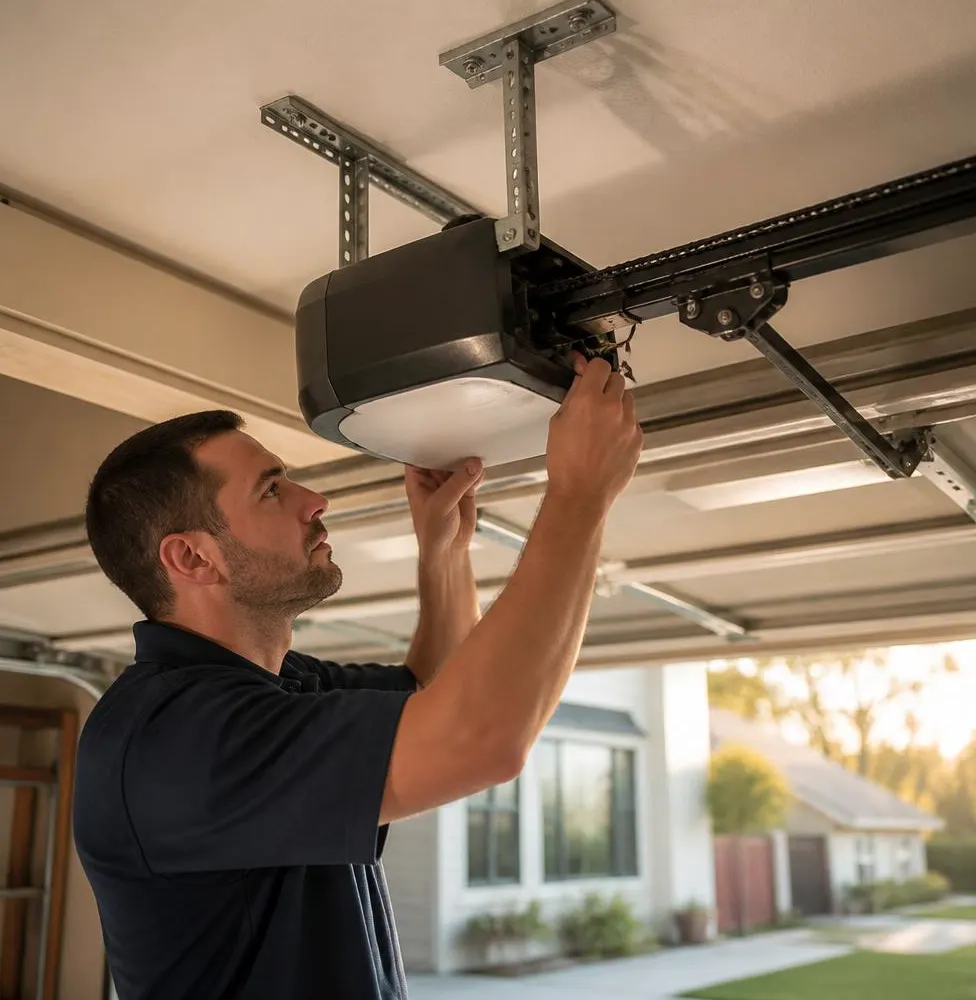
What a technician sees on this kind of call
This is one of the most common calls we get this time of year. A homeowner presses the remote, the door starts down, gets partway, and suddenly reverses back up on its own. Or it won't close at all — the opener light blinks a set number of times, and the door just sits there open. Either way, the owner has usually already tried pressing the button five or six more times, which doesn't help and can sometimes make things worse if there's a real obstruction.
With the leaves coming down and temperatures swinging hard between warm afternoons and cold mornings, early fall through winter is peak season for this exact complaint in this part of Ohio. The good news is that almost every cause has a clear fix, and a technician checks them in a specific order because the most common problems are also the cheapest to solve.
The symptoms, and what they tell you
- Door reverses a few inches above the floor: usually points to the close-limit setting or something in the door's final few inches of travel.
- Door reverses immediately after starting down, or won't start closing at all: almost always a safety sensor issue.
- Door reverses at an inconsistent point every time: often a track obstruction, worn roller, or binding hinge.
- Opener light blinks a set pattern and door won't move: most openers use this to flag a sensor fault — check your owner's manual for the code.
What a technician checks, in order
1. The safety sensors (photo eyes)
These are the two small sensors mounted near the floor on each track rail, aimed at each other across the doorway. If anything blocks that beam, or the sensors are even slightly out of alignment, the door won't close — or it'll start closing and reverse the instant the beam is interrupted. Common culprits: a bump from a car, bike, or lawn equipment that knocked a bracket out of position; dust, cobwebs, or condensation on the lens; or low-angle autumn sun hitting one sensor directly and blinding it. The fix is usually just cleaning the lenses and realigning the sensors until both indicator lights glow steady rather than flickering. It takes a few minutes and solves a surprising number of these calls.
2. Obstructions or debris in the track
Fall means acorns, leaves, and grit working their way into the track channel. Winter adds road salt and ice buildup tracked in from driveways. Any of this can be enough to make the door bind at one point in its travel, which the opener reads as resistance and reverses to protect the door and whatever it thinks is in the way. A technician checks the full length of both tracks for debris, dents, or rust flaking, clears what's there, and lubricates the rollers and track surface.
3. Close-limit and force settings on the opener
Every opener has a travel limit telling it how far down to run before stopping, plus a force setting that determines how much resistance it'll push through before deciding something's blocking it. Metal door panels contract slightly in cold weather, which can be just enough to shift the effective travel distance and trip the force sensor near the floor. If the sensors and tracks check out clean, adjusting these settings per the opener's manual often resolves a reversal that only happens on cold days.
4. Worn rollers or hinges
If the door binds at the same spot every single cycle, worn rollers or a bent hinge are often the cause rather than anything electronic. The opener feels the extra resistance and reverses before forcing the door through it. Replacing rollers and hinges is a straightforward job and a good one to catch early, before the binding stresses the opener itself.
5. Spring tension and door balance
A door that's out of balance makes the opener work harder than it should, especially near the end of its travel. Over time this can push the opener past its force threshold and trigger a reversal, even with nothing actually blocking it. You can check balance by disconnecting the opener and lifting the door by hand — it should move smoothly and hold its position partway up. If it feels heavy, drops on its own, or the opener struggles consistently, the springs need adjustment or replacement. This isn't a DIY repair given the tension involved.
6. Aging opener electronics
If everything above checks out and the reversal is still inconsistent with no clear pattern, the opener's logic board or force-sensing circuitry may simply be wearing out. This is more common in units that have been in service for many years and have been through repeated hot-summer, cold-winter cycles.
When to call Hudson Garage Door
If you've cleaned and realigned the sensors and the door still won't close reliably, it's worth having it looked at before the problem leaves your garage — and whatever's stored in it — exposed overnight. Our Garage Door Repair service covers everything from sensor alignment and track repair to force and limit adjustments, and if the issue turns out to be spring tension, we handle that safely as part of the same visit. Regular Garage Door Maintenance ahead of winter also catches most of these issues before they strand you with a door that won't close during an ice storm.
If your door is stuck open or refusing to close in Hudson, Stow, Twinsburg, Macedonia, Aurora, Kent, Streetsboro, or Cuyahoga Falls, call Hudson Garage Door today and we'll get it diagnosed and working right.